

By: Lyndsey Tuft, PhD, Jennifer Byrne, OTD, Kelli Cabrera, OTD, Ilana Huz, PhD, & Kayleigh Bealer, MS
A 32-year-old Green Beret with 12 years of service and four combat deployments sits down for his annual health assessment.
He lies on the suicide screener, as he always does. He has thought about suicide but he’s only told his best friend, another Green Beret. He knows how to answer the questions in a way that keeps him from being flagged or jeopardizing his career.
He barely sleeps. No matter how hard he tries, he can’t seem to get the amount or the quality of sleep he used to. Pain is part of it, but he knows it’s more complicated than that.
Every morning is a fight to find the motivation to get out of bed. Working out used to be his release; now it feels like another obligation.
He isn’t just tired. He is exhausted every single day.
Last week, he forgot how to get to his dentist’s office, the same one he's been seeing for years.
Last night, his kids spilled water out of the bathtub, and he screamed at them. Even he was surprised at how angry this made him. His youngest cried and said he was scared of him, and his oldest told him he hated him.
His wife tried to talk to him about his anger, and he shut down. He knew there was something he needed to say but couldn't find the words to explain what was happening inside him.
Intimacy has become an ongoing struggle. He feels ashamed of it. It is one more thing he doesn’t know how to talk about.
He knows he loves his wife. He knows he loves his kids. He would die for them without hesitation. He just can’t seem to feel the love he knows is there.
And then there's the grief, which sometimes turns into shame.
He wears one bracelet, but he carries the memories of more than 10 friends lost to the war, some in combat, others to suicide and some to cancer.
His labs come back and his testosterone is in the high 100s, profoundly low for a 32-year-old man. In the context of his symptoms and consistently low levels, his physician prescribes testosterone replacement therapy—and it helps. His sleep improves, some of the challenges with intimacy improve, and his energy and motivation are better.
But he still experiences difficulties that impact his everyday life. He forgets things, and he struggles to regulate his stress response, especially at home. He still shuts down when he needs to communicate about anything other than his job. He has anger outbursts that feel disproportionate to the moment. He still feels removed from the man he once was.
He still carries the pain, the grief, the cognitive changes, the emotional disconnection, and the accumulated weight of more than a decade spent operating at a level the human body and brain were never designed to sustain indefinitely.
This is the pattern clinicians increasingly recognize in the Special Operations community: low testosterone paired with fatigue, cognitive changes, emotional disconnection, and disrupted sleep, appearing together often enough that it can no longer be treated as coincidence. Researchers call this pattern Operator Syndrome, a constellation of physical, cognitive, emotional, social, and spiritual effects resulting from the sustained, extreme demands of a career in special operations and other high-risk careers.
This distinction is no longer merely academic. Secretary Hegseth’s recent memo on Health and Human Performance Optimization makes testosterone screening a required element of the Periodic Health Assessment (PHA) Program for all Active Duty and Reserve Component personnel aged thirty and older. The memo frames this screening as addressing Operator Syndrome and calls for “applying lessons learned from treating Operator Syndrome across the Total Force” to optimize readiness more broadly. A policy built for the full force now rests, in part, on a framework first identified and most rigorously studied in one of the military’s smallest, highest-risk populations. Getting that framework right is not optional. It determines what gets measured, treated, and, ultimately, overlooked for Special Operators most immediately, and now for the wider force as well.
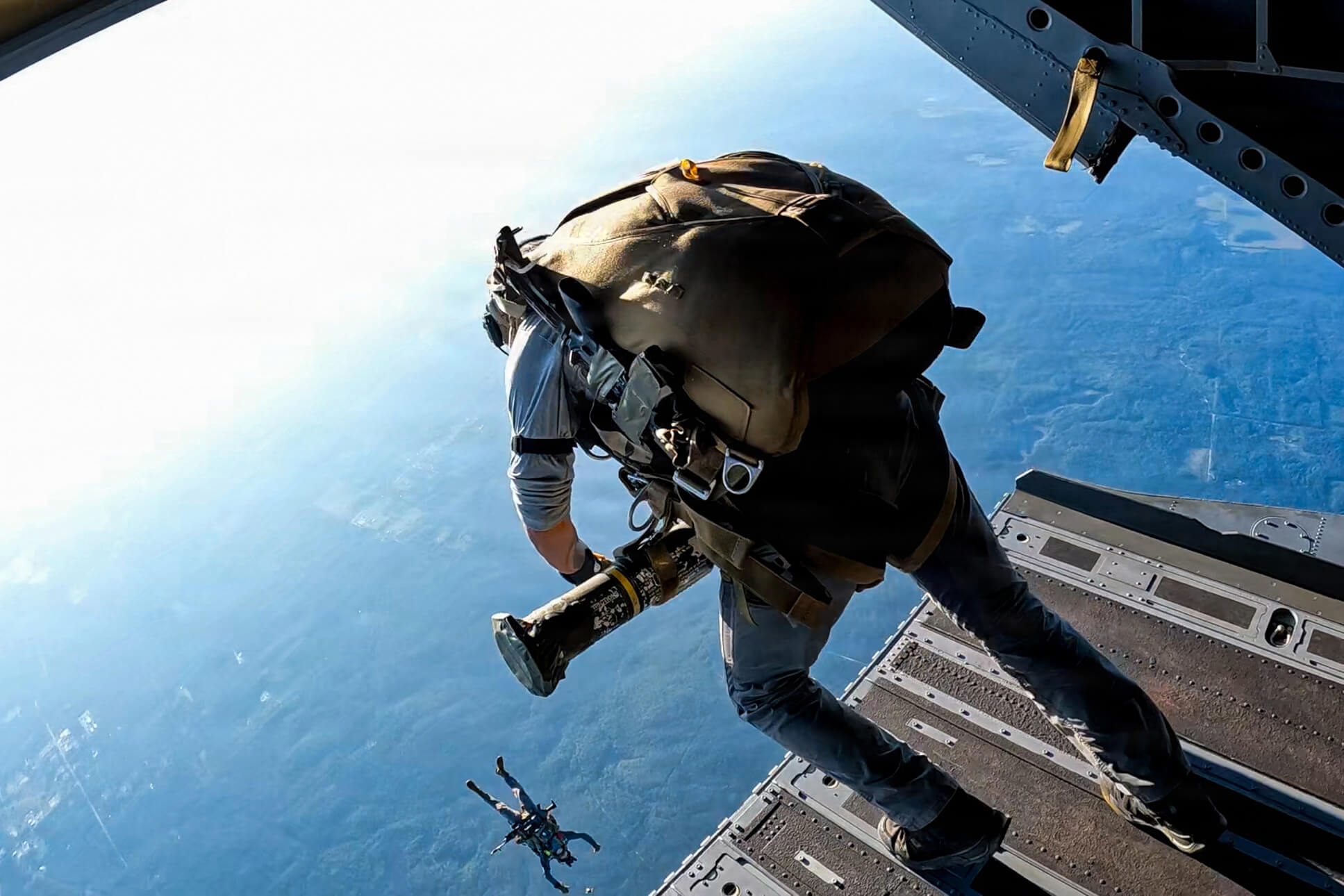
Soldiers assigned to the 5th Special Forces Group exit a CH-47 Chinook helicopter during Northern Strike at Camp Grayling, Mich., Aug. 2, 2026. (Photo courtesy of DoW Image Gallery) What gets missed by a single hormone panel
Although low testosterone is frequently associated with many of the conditions within the Operator Syndrome umbrella, treating low testosterone in isolation is too narrow of an approach to adequately address the constellation of symptoms. Testosterone level is an important indicator of Operator Syndrome; however, it is one piece of a larger picture, and testosterone screening alone leaves other pieces of the picture unexamined.
This isn’t just a clinical observation specific to Special Operators, it reflects established endocrinology guidance. The Endocrine Society’s clinical practice guideline recommends against routine testosterone screening in the general population, while identifying certain high-risk groups, including those with chronic occupational stress and cumulative physical trauma, as appropriate candidates for targeted screening. [1] Special Operators, and increasingly the broader force under sustained operational demands, fit within that high-risk framework. The guideline also specifies that a diagnosis of low testosterone requires both symptoms consistent with deficiency and confirmed low levels, not a lab value considered in isolation. Testosterone levels can also be suppressed by factors such as illness, poor sleep, and inadequate nutrition—all of which the guideline itself recognizes as relevant. In a military population, those factors take on a specific shape: high operational tempo, frequent TDY and travel, disrupted sleep and circadian rhythm, inconsistent nutrition, and elevated alcohol intake are all common features of the job that can independently suppress testosterone, regardless of what’s actually driving a person’s underlying symptoms. A single reading, without accounting for any of this context, is difficult to interpret.
A recent study of treatment-seeking Special Operators found something clinically noteworthy: most didn’t present with the mental health patterns clinicians traditionally look for. [2] Rather than classic anxiety, depression, or PTSD, roughly three-quarters showed a pattern called dysphoric arousal or hyperarousal, a mix of low motivation, blunted emotion, and social withdrawal, often combined with irritability, hypervigilance, and an inability to relax. Fewer than a quarter matched the traditional diagnostic picture.
That distinction matters. Standard depression and PTSD screeners, or a hormone panel measuring testosterone, may identify pieces of the problem without capturing the full picture. Given the demands of training, repeated deployments, and cumulative allostatic load, Special Operators are already a high-risk population. Yet most clinical tools assess individual systems in isolation, not the interconnected, multisystem changes that can emerge across a career in special operations. The symptoms are real and measurable. What we lack is a framework capable of evaluating them as a whole. Closing that gap should be a central focus of the next phase of clinical research.
Why isolated testing is insufficient
The complexity of Operator Syndrome demands a complex, multi-systems approach to assessment and care. Testosterone screening offers one objective and important window into the person's well-being. However, a full picture of a Special Operator’s health requires combining objective indicators with subjective reports, not only from the patient but also from those who know them best, such as a spouse, partner, close friend, fellow operator, or care team.
That combination of data is important because self-report has real limits in this population. Research on military populations has found that certain symptoms, particularly alcohol use and the negative self-perception common in complex trauma responses, are consistently rated as more difficult to disclose than others, even in anonymous surveys. [3] The Department of War, then known as the Department of Defense, has separately recognized stigma as a persistent barrier to treatment-seeking across the force. [4] Special Operators may underreport or minimize the experiences most central to Operator Syndrome, whether out of fear of very real career consequences, concern that they will be seen as unfit or “too weak” to lead a team, or simply because they have come to view these symptoms as a “normal” part of the job. This is not an individual failure but a predictable response to a culture in which disclosure can carry real professional risk.
This is why observations from people closest to an operator, such as a spouse, add something that a self-report questionnaire or a single panel marker often cannot—a second vantage point on symptoms an operator may not recognize in themselves or may be reluctant to name even on an anonymous form. A comprehensive assessment doesn’t replace the operator’s own report with someone else’s; rather, it treats both as valid, complementary sources of data to paint a full picture of the operator’s health. Even well-designed self-report tools can help close part of this gap by asking operators not only what they notice in themselves but also what they may have heard from the people around them.
What integrated assessment looks like in practice
Individuals experiencing Operator Syndrome are often required to seek care from providers across a wide array of disciplines (e.g., primary care, behavioral health, sleep medicine, endocrinology, physical therapy) because their symptoms genuinely span these systems. However, treating Operator Syndrome as a list of separate conditions, each assigned to its own specialist working in isolation, misses the point. Effectively treating an operator requires an integrative care approach with a team of specialists who work collaboratively, with each specialist’s findings informing the others’ understanding of the full picture.
An integrative approach to assessment begins with a comprehensive medical, psychological, and social history that ideally includes input from people close to the operator, not just the operator alone. It draws on standardized questionnaires covering mood, trauma-related symptoms, and substance use, along with metabolic and endocrine lab work. It is essential that test scores and lab results be interpreted holistically by appropriate specialists and in context, recognizing first and foremost that each patient is an individual with a unique history and military experience.
Ivory et al. (2024) proposed a helpful way to determine where to start by using the “SSSS” prioritization model, which suggests that the highest priorities for treatment are suicidality, sleep disorders or issues, substance use, and sex hormones (i.e., endocrine levels), since these carry the highest safety stakes and the most influence over everything else. [5] Care needs to be delivered with sensitivity to what the operator may have been through, by building trust, involving the operator in decisions about their own care, and recognizing that recovery works best when it’s collaborative.

Soldiers assigned to the 5th Special Forces Group conduct nighttime combat dive training during Exercise Northern Strike 26-2 in Tawas City, Mich., Aug. 10, 2026. (Photo courtesy of DoW Image Gallery) Where the field is headed
Dr. Frueh and colleagues first named Operator Syndrome in 2020, describing a pattern repeatedly observed over decades among Special Operators: physical, cognitive, and psychological symptoms that didn’t fit neatly into any single existing diagnosis. [6] That original work was observational, with clinicians noticing a pattern worth naming. The next challenge is measurement: building tools that can capture this pattern with the same rigor clinicians expect from any other validated health instrument.
Dr. Frueh has since described the same pattern extending beyond formally designated Special Operations Forces personnel to aviators, private defense contractors, intelligence personnel, and law enforcement and firefighting professionals who face comparable cumulative physical and psychological demands. The peer-reviewed research on Operator Syndrome to date remains specific to Special Operations Forces (SOF). Whether and how the pattern holds across this wider set of high-risk occupations is the next frontier for empirical study, one Frueh himself has begun to sketch in his broader writing on the subject.
Researchers and clinicians are now developing standardized assessments that capture how Operator Syndrome presents across multiple systems simultaneously. 5by5 Performance Therapy and A-G Associates are among the teams doing this work, currently developing and validating the Operator Syndrome Symptom Scale-Self Report (OSSS-SR), a multi-domain self-report instrument designed to assess Operator Syndrome symptoms across physical, cognitive, emotional, social, and other domains in a single structured assessment. One researcher studying this population has separately argued that regular, proactive screening for SOF-specific psychological patterns, delivered in a way that reduces rather than reinforces stigma, should become a standard part of care rather than something patients must seek out on their own, a view that aligns with the broader direction this field is moving in. [7] These efforts aim to capture the full breadth of symptoms operators experience and replace a patchwork of separate, siloed screenings by independent specialists who often do not talk to one another.
A well-designed tool does more than list symptoms. It prompts reflection, asking not only what an operator may notice in himself but also what he may have heard from the people who know him best, since operators may not always recognize or disclose certain experiences on their own. Building this kind of tool that clinicians, researchers, and operators alike can trust requires rigorous testing over time across the disciplines that Operator Syndrome touches, and that process is ongoing. What began as clinical observation is now moving toward formal measurement, extending the original framework rather than replacing it. The direction is clear either way: a single panel, however useful, was never going to be enough to see the whole picture.
Limitations
The growing attention to Operator Syndrome marks real progress in understanding the health care needs of Special Operators, but the science behind it is still young, and we need to be clear about that. The published body of research remains relatively small, and Operator Syndrome does not yet have formal diagnostic status in the systems clinicians and researchers use to code medical or psychiatric conditions. But the absence of a formal diagnosis does not mean the absence of a real, measurable pattern.
The study referenced above, for example, drew on a single sample of Special Operators already seeking treatment at one clinical program, and its design captured a single point in time. That means it cannot establish whether operational demands directly cause the observed symptom patterns, only that they occurred together, and it cannot speak to the experience of operators who are not currently seeking care at that program. Findings like these are best understood as early, important signals. More broadly, research in this area has generally relied on modest sample sizes, which limits how confidently anyone can generalize about the full range of Operator Syndrome’s presentation across the SOF community.
Even well-designed, anonymous assessments cannot fully eliminate underreporting. Researchers studying disclosure in military populations have found that concerns about how symptoms reflect on one’s identity as an operator can suppress honest reporting, even when anonymity is assured. [3] This limitation will need to be addressed as multisystem assessment tools are developed and refined.
What Special Operators deserve
Every symptom described—the fatigue that doesn't resolve, the irritability, the sleep that never quite restores, the pain that gets absorbed into routine—has a person, and often a family, behind it. A spouse who noticed the changes long before any lab result did. A child who is scared of his father because of the often unexpected, explosive anger outbursts. A teammate who has watched a friend push through physical and emotional pain that should have been addressed years earlier. An operator who has learned to describe what he's carrying as simply part of the job because no one has offered a better word for it.
That's the cost of assessing Operator Syndrome one system at a time: real people spend years being partially seen. A hormone panel treated in isolation. A mood screen that doesn't fit the pattern. Misdiagnosed PTSD. Symptoms scattered among specialists who never compare notes. None of it is anyone's fault. Rather, it's what happens when the tools available haven't caught up to what clinicians observe.
That's also what makes this moment worth paying attention to. The same population asked to carry an extraordinary occupational burden is now the focus of a growing, increasingly rigorous effort to understand that burden accurately, not through a single number but through the full picture. Every study cited here, every clinical framework built to prioritize care, and every multisystem assessment tool now in development is a step toward the same outcome: Special Operators evaluated as whole people, not as a collection of isolated findings.
For a spouse or family member reading this, that means one thing to carry into your next medical appointment: a normal result on any single test doesn't mean nothing is wrong. If something feels off in energy, mood, sleep, or in the person you know, it's worth asking whether the full picture has been considered, not just one piece of it.
For the clinicians, researchers, and advocates doing this work, the task ahead is clear: keep building tools rigorous enough to meet what this population has always deserved.
References
- Bhasin, S., Brito, J. P., Cunningham, G. R., Hayes, F. J., Hodis, H. N., Matsumoto, A. M., Snyder, P. J., Swerdloff, R. S., Wu, F. C., & Yialamas, M. A. (2018). Testosterone therapy in men with hypogonadism: An Endocrine Society clinical practice guideline. The Journal of Clinical Endocrinology & Metabolism, 103(5), 1715–1744. https://doi.org/10.1210/jc.2018-00229
- Adams, S. W., Frueh, B. C., Sabangan, J., Pawlowski, C. A., Oh, R. C., Pugach, C. P., Chen, Q., & Harris, O. A. (2026). Persistent behavioral, biological, and physiological sequelae in active-duty treatment-seeking U.S. special operations forces personnel: A cross-sectional study. The Lancet Regional Health – Americas, 61(101534). https://doi.org/10.1016/j.lana.2026.101534
- Prinz, W. H., Tran, U. S., Straub, G. C., & Lueger-Schuster, B. (2025). Underreporting in the military: Perceived sensitivity of trauma-related and comorbid disorders among soldiers and civilian employees of the Austrian Armed Forces. European Journal of Psychotraumatology, 16(1), 2486903. https://doi.org/10.1080/20008066.2025.2486903
- Acosta, J. D., Becker, A., Cerully, J. L., Fisher, M. P., Martin, L. T., Vardavas, R., Slaughter, M. E., & Schell, T. L. (2014). Mental health stigma in the military. RAND Corporation. https://www.rand.org/pubs/research_reports/RR426.html
- Ivory, R. A., Graber, J. S., Frueh, B. C., & Cady, H. (2024). Operator syndrome: Nursing care and considerations for military special operations. Nursing2024, 54(8), 25–31. https://doi.org/10.1097/NSG.0000000000000001
- Frueh, B. C., Madan, A., Fowler, J. C., Stomberg, S., Bradshaw, M., Kelly, K., Weinstein, B., Luttrell, M., Danner, S. G., & Beidel, D. C. (2020). “Operator Syndrome”: A unique constellation of medical and behavioral health-care needs of military special operation forces. The International Journal of Psychiatry in Medicine, 55(4), 281–295. https://doi.org/10.1177/0091217420906659
- Gielas, A. M. (2024). Ready to bleed when touched — moral injury in the Special Operations Forces military population. Open Health, 5(1), e270515–e270519. https://doi.org/10.1515/ohe-2023-0028
Learn More
For more information on Operator Syndrome or the Operator Syndrome Symptom Scale–Self Report (OSSS-SR), please contact Dr. Jennifer Byrne at jennifer.byrne@5by5performancetherapy.com. Follow A-G Associates and 5by5 Performance Therapy on LinkedIn to keep up with emerging information on Operator Syndrome.


About A-G Associates
A-G Associates is an award-winning, Service-Disabled Veteran-Owned Small Business (SDVOSB) and SBA 8(a) federal consulting firm delivering high-impact strategy, stakeholder engagement, research, and evaluation solutions that help leaders translate policy into practice and priorities into measurable results. Founded in 2008 by Chris Gonzalez, a Marine Corps Veteran who served in Iraq and Afghanistan, and Dr. Peg Anthony, a nationally recognized expert in organizational and management consulting, A-G was built on a simple principle: bring the right people together to solve complex human problems with integrity and purpose. More than 60% of our team are Veterans, military spouses, and family members—people who bring lived experience and personal commitment to the work. Our integrated team of subject matter experts, researchers, clinicians, data scientists, and change leaders deliver data-driven insights and provide expert guidance to strengthen public health and safety systems, with a focus on advancing military and Veteran wellbeing. We partner with federal agencies, nonprofits, and mission-aligned organizations to help clients navigate meaningful process, culture, and strategic transformation for measurable, lasting impact. Recognized as a two-time Inc. 5000 honoree as one of the fastest-growing private companies in America and named to Inc.'s Vet100 list of the nation's fastest-growing Veteran-owned businesses, A-G continues to grow as a result of our disciplined execution and deep mission alignment that our clients trust.
About 5by5 Performance Therapy™
5by5 Performance Therapy delivers operator-centric, evidence-based care designed to strengthen the mental, physical and cognitive health of Special Operators, tactical military and civilian operatives, and their spouses. Founded by Air Force Veteran and occupational therapist Dr. Jennifer Byrne, 5by5 brings together a multidisciplinary team of clinicians experienced in serving military operators and their families. We understand how cumulative brain injuries, high allostatic load, trauma, disrupted sleep, chronic stress, and other operational exposures can affect the individual, the family, and long-term performance. Through in-person, virtual and hybrid programs, 5by5 provides personalized support that meets clients where they are. 5by5 is also helping advance the Operator Syndrome Symptom Scale–Self Report (OSSS-SR), an assessment being validated to better understand and prioritize the physical, cognitive and emotional symptoms experienced by current and former Special Operators. This work is intended to strengthen assessment strategies and inform more responsive, solution-focused care for operators and their families. Our multidisciplinary approach may include mental health care, occupational therapy, nutrition, performance coaching and education focused on sustainable habits, resilience, recovery, and everyday function. We also contribute to blast-injury and operator-centric research and academia to expand understanding of the long-term health needs of the Special Operations community. We care deeply about the people behind the mission. Our goal is to help operators and families protect their health, improve performance, and build a stronger foundation for life during and after service.