
By: Chris Gonzalez, President & Co-Founder of A-G Associates
“Brokenness is not failure, brokenness is an opportunity to put it back together again, take the scar and move forward.”
- VA Secretary Doug Collins
As a Marine Corps Veteran, previously deployed to both Iraq and Afghanistan, I know what it’s like to have past events affect you. I think frequently about the friends I’ve lost, both in combat and after returning home from deployments, and the things that I’ve seen during my military service.
These experiences have shaped me and influenced my journey in countless ways, but they don’t define me — or any other Veterans.
I’ve seen many Veterans struggle with communicating their experiences, both positive and negative, with their families and civilians. This struggle can cause a divide as it can be hard to relate to neighbors, co-workers or even loved ones who have no idea of what you’ve been through.
Today, I’m calling on my fellow Veterans to show their bravery. I’m not asking for the same kind of bravery that one shows in combat, but instead, bravery in the form of vulnerability. I’m calling on the Veteran community to help bridge the divide by sharing about their military experiences.
It may be uncomfortable at first, but having hard conversations and making your story known can make a huge difference with developing new relationships, finding a supportive community, and achieving post-traumatic growth. These conversations are also imperative to reducing misconceptions about post-traumatic stress in the Veteran population.
The Civ-Mil Divide
In recent years, I served in the Marine Corps Reserves, working as an instructor for several active-duty units instructing Marines and other service members. Being in the Reserves allowed me to live dual lives in civilian and military worlds and to observe these cultures simultaneously.
One culture is mission-driven with an emphasis on accomplishing set tasks, formal rank structure, and direct interpersonal communication with colleagues. The other culture can be more individualistic, with an emphasis on personal needs, no formal structure, strong emphasis on digital communication and sometimes an unwillingness to communicate with one another for various reasons (ideology, beliefs, tribalism, etc.) I believe this contrast of cultures makes the transition from Military to Veteran a difficult one and exacerbates the cultural divide between the two populations.
I also believe civilian misconceptions heavily contribute to the cultural divide. One of those misconceptions is about the military experience and post-traumatic stress, specifically with the word “disorder” attached to it. A 2021 survey of approximately 2,000 people, done by the Cohen Veterans Network, found 67% of (civilian) participants believed MOST Veterans have PTSD, with 26% believing that those with PTSD are dangerous and 23% of respondents believed that PTSD is untreatable. This misconception potentially restricts Veterans from being fully engaged with civilians and can be a barrier to strong relationships, community involvement, and getting formal care.
To break the cycle and bridge the divide, I believe Veterans must own the conversation around post-traumatic stress. That doesn't mean denying the reality of PTSD as a serious condition; it means refusing to let the diagnosis define the whole story.
Shifting the conversation toward growth lets us talk honestly about what we've been through and what we're capable of becoming. This should be done by joining communities across the country and adding value by sharing experiences — both positive and negative in a variety of settings, including group fitness club, neighborhood volunteering, work, church, or with a mental health professional.
Shifting to Post-Traumatic Growth
Rather than framing trauma as a lifelong deficit, the Veteran community should embrace the concept of Post-Traumatic Growth. This shift recognizes that adversity, while painful, can also forge greater resilience, empathy, and purpose. Veterans, with their courage and lived experience, are uniquely positioned to lead this cultural transformation.
Being open about trauma requires vulnerability—and this too is a form of bravery. When Veterans speak candidly about their struggles, they help normalize the experience and encourage others to do the same, even those outside the Veteran community who have experienced trauma. The goal isn’t to erase pain but to recast it as part of a powerful journey forward.
Community Health: The Key to Resilience
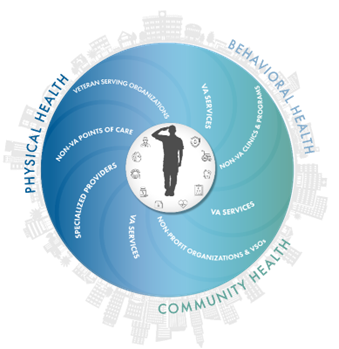
Community connection isn't a substitute for evidence-based treatment when needed—but it's often the missing piece that makes treatment stick.
I believe that one of the strongest predictors of how well someone copes with trauma isn’t the intensity of the trauma itself, but the strength of their support system. In the Veteran community, the sense of purpose and belonging formed during service is deeply ingrained, and its absence in civilian life is acutely felt. Veterans and those who support them must anticipate this absence and be willing to explore the civilian world to find a new purpose while becoming engaged in a new community. At A-G Associates’ Military, Veteran and Family Center of Execellence, this concept is referred to as Community Health.
Community Health—a concept that is paired with mental and physical wellness—is essential for post-service reintegration. It’s about connection, shared purpose, and feeling valued. Veterans thrive in environments where they can continue to serve, challenge themselves, and be dependable teammates. Whether through volunteerism, fitness programs, or simply showing up for a friend, these avenues foster healing in ways traditional clinical settings sometimes cannot.
Honoring the Journey
Veterans are individuals who have endured, served, and sometimes suffered, but who also possess extraordinary potential to inspire healing and growth. As we reframe the way we talk about post-traumatic stress, let’s ensure that Veterans are not seen as victims of disorder, but as survivors, leaders, and catalysts for a stronger, more compassionate society.
To my fellow Veterans, you are not alone. Your experience is different than mine, but we can learn from one another’s experiences. Many of us have experienced trauma and taken steps to develop a support system and community that helps us serve one another. We can do this together.
This article is written from the perspective of a combat Veteran who has worked in the Behavioral Health field for over 15 years but does not represent the official stance of A-G Associates’ Military, Veteran and Family Center of Excellence (MVF COE). For a clinical perspective on PTSD treatment and why precision matters, see Dr. Stephanie Renno's companion piece.
Learn More
The Military, Veteran and Family Center of Excellence (MVF COE) works with organizations looking to implement or improve physical, mental, and community health programs.