

From Leadership to Ownership:
7 Hard Lessons for Aspiring Business Leaders
7 Hard Lessons for Aspiring Business Leaders
By: Chris Gonzalez
After eighteen years and hundreds of conversations with aspiring business owners, one pattern keeps emerging: People romanticize ownership. They picture autonomy, flexibility, and impact.
In reality, business ownership is a daily exercise in ambiguity, pressure, and constant tradeoffs. For those stepping into leadership roles for the first time, the transition from leading people to owning outcomes can be both exhilarating and disorienting.
Ownership isn’t just “more leadership.” It demands a different mindset—one that blends vision with execution, trust with accountability, and ambition with self-awareness.
Having made this transition myself — and having guided countless small business owners through it — here are seven hard lessons that consistently prove true.
7. Leadership Is Simple. Business Is Not.
Leadership principles are straightforward:
- Hire good people.
- Understand what motivates them.
- Build trust.
- Get out of their way.
But in ownership, simplicity disappears without structure.
In business ownership, leadership breaks down when there is no clear definition of success, no roadmap to reach it, and no plan for navigating inevitable challenges. Vision without structure creates chaos. Structure without vision creates stagnation. Ownership requires a delicate balance of both – at the same time.
6. If You Don’t Define Success, You’ll Never Feel It
One of the most overlooked responsibilities of business leadership is defining success before pursuing it. Without a clear definition, leaders risk burning out while still feeling like they’re falling short.
Effective owners ask three questions early and revisit them often:
- How will success be defined this year?
- How will success be defined in three years?
- What will success cost—financially, emotionally, and personally?
In ownership, progress matters more than perfection. Success is rarely a single win; it’s sustained momentum over time. Leaders who recognize this create healthier cultures and more resilient organizations.
5. You Don’t Get a Playbook
Unlike environments where plans are handed down from above, business owners must build their own, from the ground up. That means setting strategy amid uncertainty, making decisions with incomplete information, and accepting that ambiguity is part of the job.
Strong business planning rests on three core pillars:
- Purpose and operational discipline – Why the business exists and whom it serves, translated into how work gets done, by whom, and with what level of accountability.
- Communication and outreach– How potential clients discover your business and why they would choose your product or service over competitors.
- Financial reality and infrastructure– A clear understanding of profitability, cash flow, and the true cost of growth, including which capabilities should be built in-house versus outsourced.
Ownership means living with the consequences of these decisions and adjusting them when reality proves you wrong.
4. The Real Cost
Revenue is not the only currency in business. Time. Stress. Relationships. They’re all just as important. Ownership magnifies the pressure.
Sustainable leadership requires intentional stress management, strong personal relationships, and regular moments of disconnect to regain perspective.
Burnout is not a badge of honor. It’s usually a failure of boundaries.
3. You are your brand – Whether you Like it Or Not
In ownership, your values and the company’s values merge.
Your values are not separate from the company’s values. Owners set the tone through hiring decisions, culture, rewards, and how they show up when things go wrong.
People watch what you do under pressure more than what you say in meetings.
Your consistency becomes the organization’s stability.
2. Persistence is Powerful, But so is Flexibility
In ownership, grit matters. But stubbornness destroys businesses.
Leaders must know when to stay the course and when to pivot. Technology changes, markets shift, and strategies become outdated, so the ability to adapt without losing purpose is a defining trait of strong ownership.
Be obsessed with success, not rigid about the path. Document how success actually happens in practice. Invite trusted people to challenge assumptions. Build alternate plans for scenarios you haven’t yet imagined.
1. The Hardest Lesson: Get Out of the Way
Control feels productive.
It isn’t.
Leadership fails when control becomes a bottleneck. Growth happens when owners trust their people to execute, innovate, and lead in their own right.
For business owners, success is not only measured in profitability or awards—though those matter. Sustainable ownership also includes strong personal relationships, a trusted and empowered team, and the ability to step away without the business collapsing.
True leadership in business ownership is not about command; it’s about alignment. When people, purpose, and performance are aligned, the organization grows—and so does the leader.
Final Thought
Business ownership is leadership with amplified responsibility. It rewards clarity, humility, and resilience.
For those willing to define success honestly, plan intentionally, and lead with trust, ownership becomes more than a role—it becomes a platform for lasting impact.
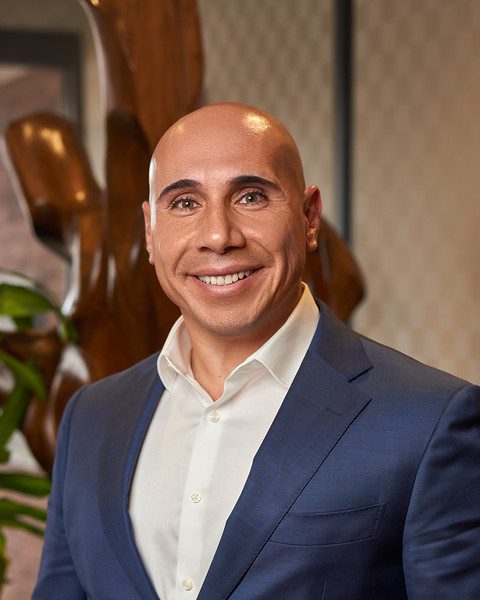
About the Author: Chris Gonzalez is President and Co-Founder of A-G Associates, a Service-Disabled Veteran-Owned and SBA 8(a) organizational consulting firm that was recently recognized in the Inc 5000 and the Vet100. A U.S. Marine and combat veteran with multiple tours in Iraq and Afghanistan, Chris drives organizational and program transformation initiatives for high-performing teams across the public, private, and non-profit sectors.